Whether you're a Manila-based importer stocking up on industrial equipment, a Cebu retailer sourcing products from Alibaba, or a Davao construction firm importing machinery parts — getting goods from China to the Philippines efficiently is one of the most important logistics decisions you'll make for your business.
The route is busy. China is the Philippines' largest import partner, accounting for over 20% of total imports. But busy doesn't mean simple. Between customs regulations, BOC requirements, PEZA zones, and the geography of an archipelago, there are real traps that cost importers money and time.
This guide breaks down exactly how it works — and how to do it right.
Step 1: Know Your Incoterms Before You Book Anything
Before touching freight rates or customs documents, you need to agree on Incoterms with your Chinese supplier. This determines who pays for what, and who bears the risk at each leg of the journey.
The most common terms in China-Philippines trade:
• EXW (Ex Works) — You bear full responsibility from the factory door. You arrange trucking to the Chinese port, export clearance, ocean freight, and Philippine customs. Maximum control, maximum complexity.
• FOB (Free On Board) — Your supplier delivers to the port in China and handles Chinese export clearance. From the moment it's on the vessel, it's your risk and cost. This is the most common term for experienced importers.
• CIF (Cost, Insurance & Freight) — Your supplier arranges shipping to Philippine port. You handle import customs from there. Common for first-time buyers, but it gives your supplier more room to inflate freight costs.
• DDP (Delivered Duty Paid) — Your freight forwarder handles everything end-to-end: Chinese export, ocean/air freight, Philippine customs, duties, and delivery to your door. The most hands-off option — and the one Ship Nanyang specialises in.
Our recommendation for Philippine importers: FOB or DDP. FOB gives you cost transparency and control over the Philippine customs process. DDP is ideal if you want zero involvement in the paperwork.
Step 2: Choose the Right Shipping Mode
Sea Freight (LCL or FCL)
Sea freight is the backbone of China-Philippines trade. The main ports of entry are:
• Manila — Port of Manila (South Harbour) and Manila International Container Terminal (MICT)
• Cebu — Cebu International Port (Pier 1 & Pier 3)
• Davao — Sasa Wharf / Davao International Container Terminal
Transit times from major Chinese ports:
Origin Port Manila Cebu Davao
Guangzhou (Nansha) 5–7 days 6–8 days 7–9 days
Shenzhen (Yantian) 5–7 days 6–8 days 7–9 days
Ningbo 7–10 days 9–12 days 10–13 days
Shanghai 8–11 days 10–13 days 11–14 days
LCL (Less than Container Load): You share a container with other shipments. Ideal for volumes under 10–12 CBM. You pay per CBM or per tonne (whichever is greater). More flexible, but slightly more handling and a longer lead time due to consolidation.
FCL (Full Container Load): You book the entire container — 20ft (approx. 25 CBM / 18MT) or 40ft (approx. 55 CBM / 26MT). More economical at higher volumes and faster because there's no consolidation/deconsolidation wait.
Air Freight
Air freight from China to the Philippines runs through:
• NAIA (Ninoy Aquino International Airport, Manila)
• MCIA (Mactan-Cebu International Airport)
• Francisco Bangoy International Airport (Davao)
Transit times are 2–4 days door-to-door. Cost is 4–6x higher than sea freight per kilogram, so this mode is best reserved for:
• Time-sensitive goods (trade show samples, urgent spare parts)
• High-value, low-weight cargo (electronics, medical devices, precision instruments)
• Cargo with a short shelf life
Step 3: Understand Philippine Customs (BOC)
The Bureau of Customs (BOC) is the gatekeeper for all imports into the Philippines. Here's what you need to know:
Required Documents
• Bill of Lading (BL) or Airway Bill (AWB) — Issued by the shipping line or airline
• Commercial Invoice — Must state accurate value, description, and HS code
• Packing List — Detailed breakdown of contents, weight, dimensions
• Certificate of Origin (COO) — Especially important if you're claiming ACFTA (ASEAN-China Free Trade Agreement) preferential tariff rates
• Import Entry (SAD) — Filed electronically through BOC's ACOS system by a licensed customs broker
Duties and Taxes
The Philippines applies the following on imports:
• Customs Duty — Varies by HS code. Under ACFTA, many goods from China attract 0–5% duty instead of the standard MFN rate. Always check if your goods qualify.
• VAT — 12% of (dutiable value + customs duty + other charges)
• Excise Tax — Applicable to specific goods (alcohol, tobacco, petroleum products, certain vehicles)
Undervaluing goods on the commercial invoice is a common mistake — and a serious legal risk under BOC's Post Entry Audit Group (PEAG). Always declare accurate values.
Customs Brokers
You are legally required to use a licensed customs broker (or a freight forwarder with in-house brokerage) to file import entries in the Philippines. Ship Nanyang works with accredited brokers across Manila, Cebu, and Davao to handle this for our clients.
Step 4: Last-Mile Delivery in the Philippines
This is where a lot of forwarders fall short, especially for shipments going outside Manila.
Manila: Multiple trucking options, short drayage to most industrial zones (Laguna, Cavite, Bulacan corridors). Watch for MMDA truck bans during peak hours.
Cebu: Port of Cebu is centrally located. For cargo bound for Visayas islands (Bohol, Negros, Leyte), you'll need inter-island re-forwarding from Cebu.
Davao: Sasa Port handles cargo well, but trucking capacity to Mindanao's interior (Cotabato, General Santos, Cagayan de Oro) requires advance planning and reliable local partners.
Ship Nanyang coordinates directly with local drayage providers in all three cities to ensure your cargo doesn't sit on the pier after customs release.
Step 5: Common Mistakes to Avoid
1. Using the wrong HS code. This affects your duty rate and whether you can claim ACFTA. A wrong code can trigger examination and delay.
2. Not having a customs broker lined up before the shipment arrives. BOC has a storage fee schedule — delays are expensive.
3. Choosing the cheapest forwarder without checking their Philippine network. A Chinese forwarder with no local partner will hand your cargo off at the port and leave you to figure out the rest.
4. Mixing restricted or regulated items without proper permits. Some goods require FDA clearance (food, supplements, cosmetics), DENR permits (certain chemicals), or PNP approval (electronic devices with specific components). Know what your goods need before they ship.
5. Ignoring transit time + customs clearance time. Sea freight to Manila might be 7 days. But factor in 3–7 days for customs processing on top of that. Plan your inventory accordingly.
Why Ship Nanyang for China-Philippines Freight
We're not a directory — we operate. Our team has direct experience clearing cargo through Manila, Cebu, and Davao, with in-house knowledge of BOC requirements, ACFTA documentation, and last-mile coordination in Mindanao.
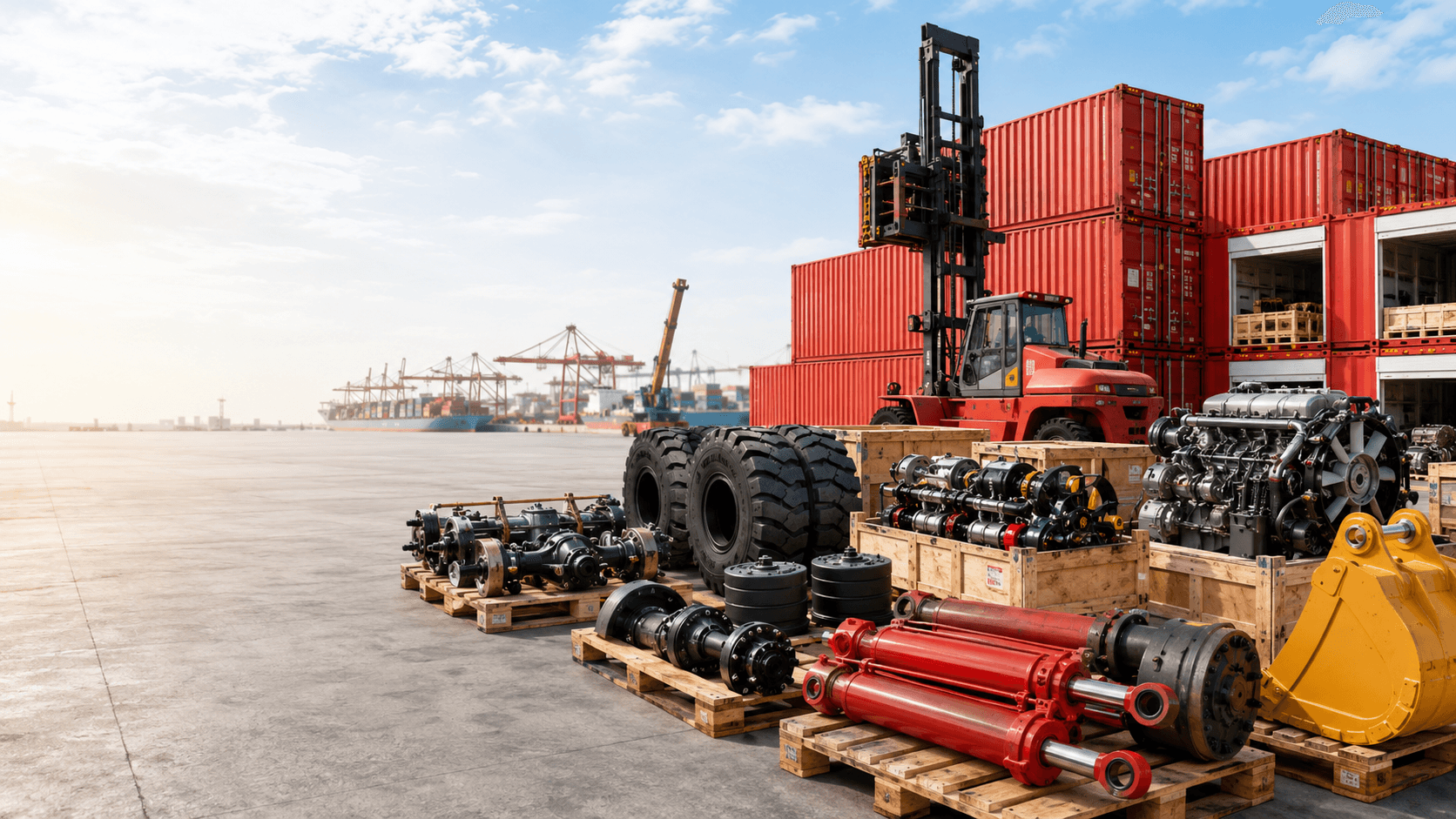
We handle LCL consolidations, FCL bookings, DDP air freight, and heavy equipment shipments — including industrial parts, machinery, and construction equipment that standard forwarders won't touch.
Get a free quote for your China–Philippines shipment →
*Ship Nanyang is a freight forwarding company operating across China, Malaysia, Philippines, and Hong Kong. We specialise in China export and heavy equipment logistics for SEA markets.*

Forget the hassle of international shipping—order from China with ease, and we'll handle the rest.


Contact

+852 6091 1394

Hong Kong Head Office
RX Nanyang Ltd
Room 1601, 16/F Workington Tower
78 Bonham Strand, Sheung Wan,
Hong Kong
Branches
Philippines, Manila
26th & 27th Floors The Podium
Ortigas Center, Mandaluyong
+63 966 401 6784
Malaysia, Kuala Lumpur
Suite 9-08, 9th Floor
Wisma Warisan, 33 Jalan Yap Ah Shak
50300 Kuala Lumpur
© 2026 RX Nanyang Ltd. All rights reserved.
Forget the hassle of international shipping—order from China with ease, and we'll handle the rest.
Contact
+852 6091 1394
Hong Kong Head Office
RX Nanyang Ltd
Room 1601, 16/F Workington Tower
78 Bonham Strand, Sheung Wan,
Hong Kong
Branches
Philippines, Manila
26th & 27th Floors The Podium
Ortigas Center, Mandaluyong
+63 966 401 6784
Malaysia, Kuala Lumpur
Suite 9-08, 9th Floor
Wisma Warisan, 33 Jalan Yap Ah Shak
50300 Kuala Lumpur
© 2026 RX Nanyang Ltd. All rights reserved.